
I see travel bloggers make the same mistake over and over again. They open a keyword tool, type in “travel tips,” and their eyes light up when they see 50,000 monthly searches.
They think, “If I can just get 1% of that traffic, I’m set!” But this way of thinking is a trap.
High search volume almost always equals impossible competition.
If you chase volume, you will end up buried on page 10 of Google. The secret to success isn’t volume; it’s finding weak competitors in top positions.
In this guide, I’ll walk you through my process for finding travel SEO keywords that are low-competition, high-intent, and actually obtainable. I’ve used this exact strategy to help new sites generate organic traffic in months, not years.
In This Article
Why Traditional Travel Keyword Research Fails
If you’ve been struggling to rank, it’s likely not because your content is bad. It’s because your target is wrong.
In the travel industry, it’s easy to get blinded by “vanity metrics.” You see a keyword like “Miami resorts” with huge search volume and assume traffic is the goal.
But here’s the reality: High volume equals high competition.
Meaning, you’re very unlikely to rank for and get any of that traffic. When you target broad terms like “best hotels in Los Angeles,” you’re competing with companies with million-dollar marketing budgets (think Expedia, Booking.com, and TripAdvisor).
Take a look at these travel keywords from Semrush. The keyword difficulty (KD) is and practically impossible for small businesses or new websites to rank for.
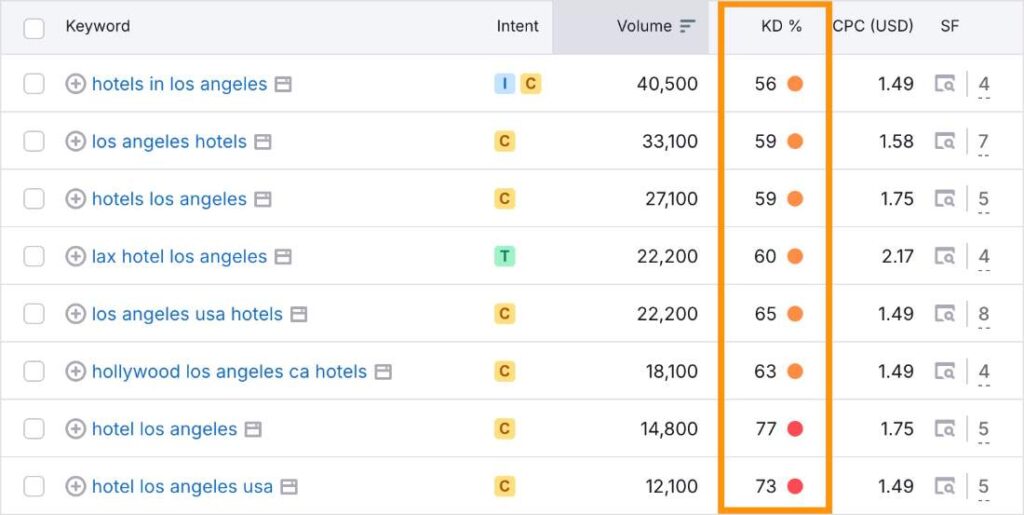
Google trusts industry giants for broad queries. As a smaller site or agency, you simply cannot beat their domain authority.
The “Intent” Mismatch
The second reason traditional research fails is a misunderstanding of search intent.
Intent is the “why” behind the search. It’s what brings someone to Google.
- Broad Intent: Someone searching “flights to London” is looking for a transaction. Google will show them booking engines, not blog posts.
- Specific Intent: Someone searching “is London safe for solo female travelers at night” is looking for experience and advice.
This is where you win.
Big booking sites are great at transactions, but they’re not the best at building relationships. They can’t offer personal advice or build a meaningful 1-on-1 connection like you can.
Detailed guides, local insider tips, and personal travel experiences can set you apart in a saturated market.
Ultimately, you don’t need travel keywords with 100,000 searches. You need specific travel SEO keywords where the user is looking for advice, and where the current Google results are weak.
3 Types of Travel Keywords You Should Target
So, if we aren’t chasing the big volume keywords, what are we looking for?
Through my analysis of thousands of search engine results pages (SERPs), I’ve found that the best opportunities usually fall into three specific buckets.
1. The “Best X for Y” (Niche Specifics)
Most people stop at “best X.” For example, “best hotels in Austin.” That is too broad.
You need to add a modifier that defines a specific audience.
- Instead of: “best hotels in Austin“
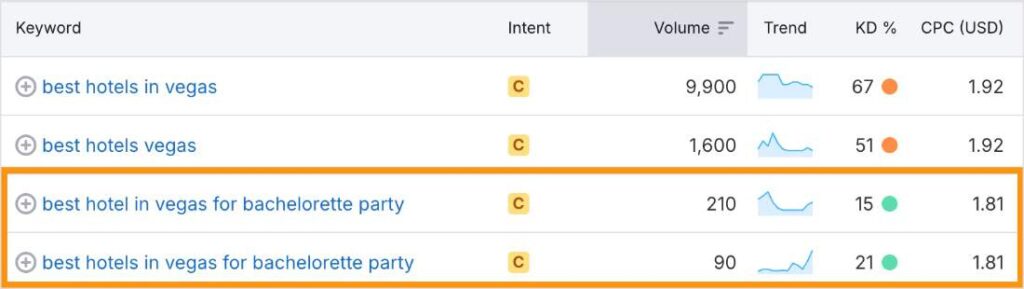
- Target: “best hotels in Austin for bachelorette parties“
When you add “for bachelorette parties,” you drastically reduce the competition. You also increase the conversion rate because you’re speaking directly to a specific user’s need.
Pro Tip: Look for modifiers like for couples, for families with toddlers, for digital nomads, or for budget travelers.
2. The “Vs” Keywords (Comparison)
Travelers are indecisive. They narrow their choices down to two options and then turn to Google for help.
- Tulum vs Cancun
- Airbnb vs hotel in Tokyo
- Eurail pass vs buying individual tickets
These keywords often have lower volume, but the people searching them are very close to making a decision. If you can provide a helpful comparison, you win their trust (and potentially a booking or affiliate commission).
3. The “Underdog” Locations
Everyone writes about Paris, London, and New York City. The competition in these cities is fierce.
But what about the smaller towns near those major hubs?
- Instead of: “things to do in Kyoto” (high competition)
- Target: “things to do in Uji” (low competition)
By targeting travel keywords for SEO focused on neighboring cities to popular locations, you can often rank on the first page with less effort. These are “low hanging fruit.”
How to Find Easy Travel Keywords Step-by-Step
Ready to find those hidden ranking gems? I’m going to walk you through my exact workflow using LowFruits.

LowFruits is the best long-tail keyword research tool for finding search queries your competitors overlook. It focuses on low-competition opportunities that have weak domains ranking on the first page of Google (aka, terms you can actually rank for).
Now, the goal here isn’t just to find any keyword. It’s to find the travel SEO keywords that have decent traffic but weak competition.
Step 1: Open the Keyword Finder
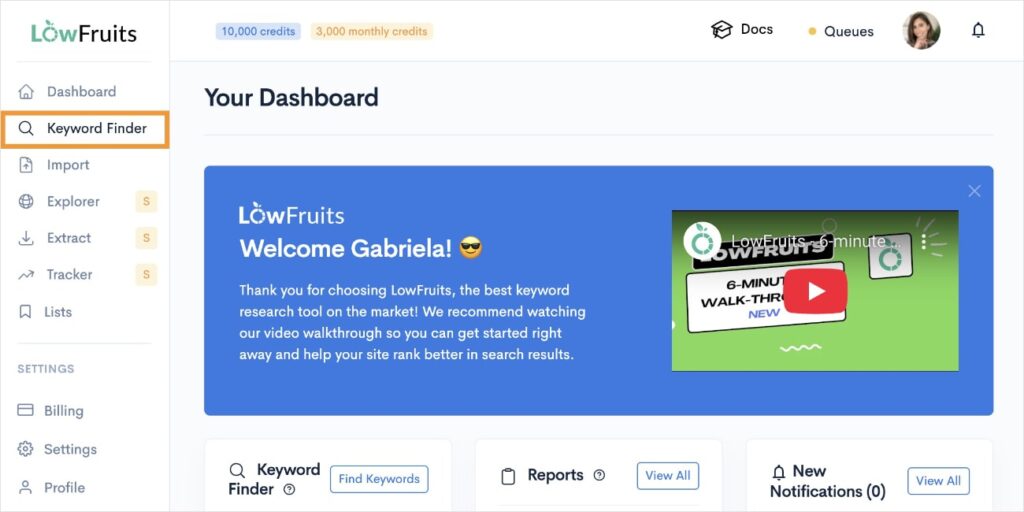
First things first, log in to LowFruits and navigate to the KWFinder tab in the left-hand menu.
Now, you need a seed keyword. This is the starting point for your research.

In the travel niche, broad keywords like “London travel” are usually too vague. This is where I love using the Wildcard (*) feature.
In LowFruits, the asterisk * acts as a placeholder. It tells the tool, “I want you to find keywords that match this specific pattern.”
Here are a few high-intent formulas I love to use for travel content:
- best time to visit * (great for informational guides)
- is * safe for solo female travelers (highly specific, high trust)
- day trips from * (perfect for targeting smaller towns near big hubs)
And if you have a specific location in mind, you can use it like this:
For example, instead of just typing “San Diego”, try typing:
- best * in San Diego
- is San Diego safe for *
- San Diego weekend *
Pro Tip: Don’t forget to set your target country and language! If you’re targeting UK travelers, make sure you select the United Kingdom, as search volumes and intent can vary wildly between regions.
Step 2: Generate Your Keyword List
Once you’ve entered your seed keyword (let’s stick with “best * in San Diego” for this example), hit Search.
LowFruits will pop up a window asking how you want to view your results.
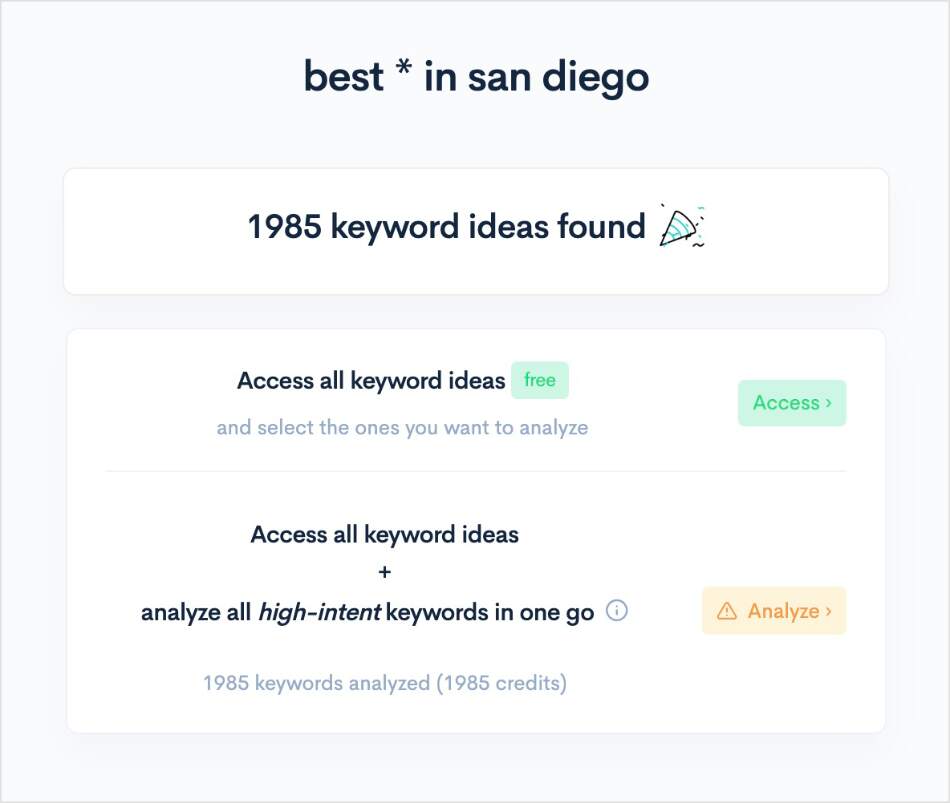
You’ll have two options:
- Access all keyword ideas: This gives you the full list, and you can choose which ones to analyze later.
- Analyze all high-intent keywords: This uses credits to instantly analyze the SERPs for the most commercial keywords.
For this tutorial, let’s select “Access all keyword ideas.” This lets us see everything first so we can be selective with our credits.
LowFruits uses a credit system to analyze the top competitors for specific keywords. 1 SERP analysis = 1 credit.
Step 3: Analyze the SERPs
Now you’re looking at a list of keyword ideas. You might see terms like “best tacos in San Diego” or “best hotels in San Diego.” Here’s my report:
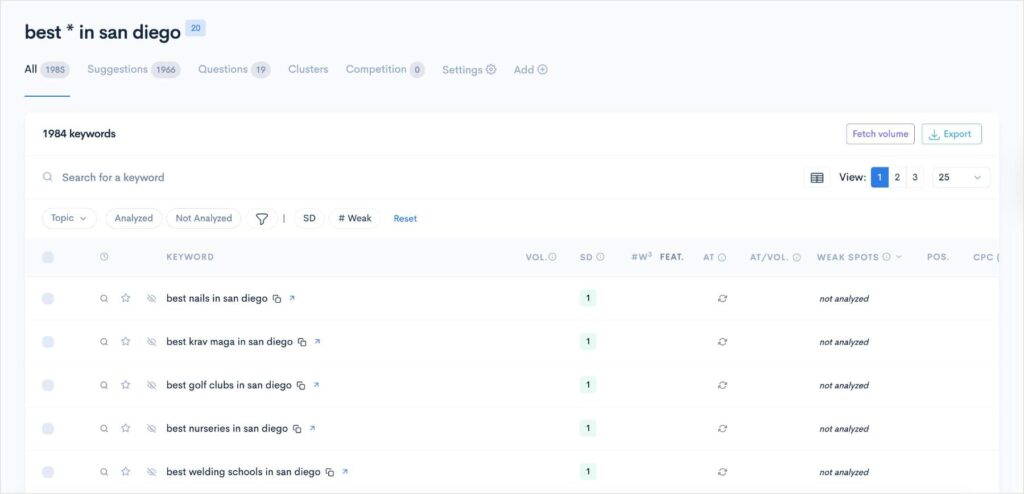
Now, we don’t know if they’re easy to rank for yet. We need to check the competition.
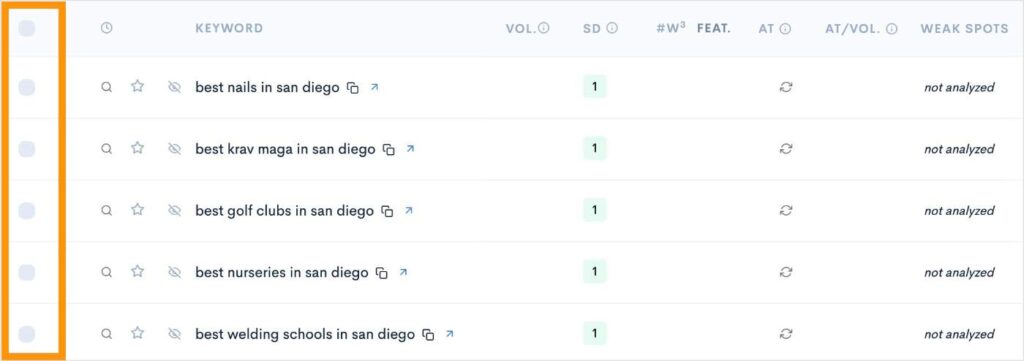
Select the keywords that look interesting to you by clicking on the checkbox to the left of the term. You can also select all by clicking the very first checkbox at the top of the list.
Once you’ve selected 1 or more keywords, a menu bar will appear at the bottom of the screen. Click the SERP Extract button.
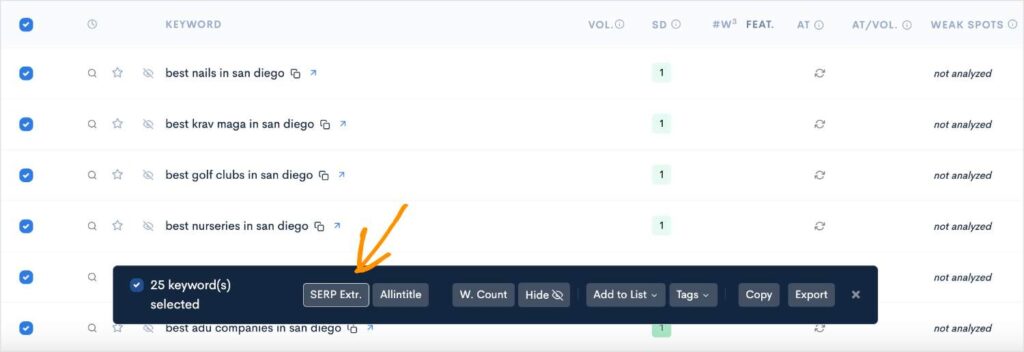
This is where LowFruits shines.
It goes out to Google, checks the top 10 results for each keyword you’re analyzing, and looks for “Weak Spots.”
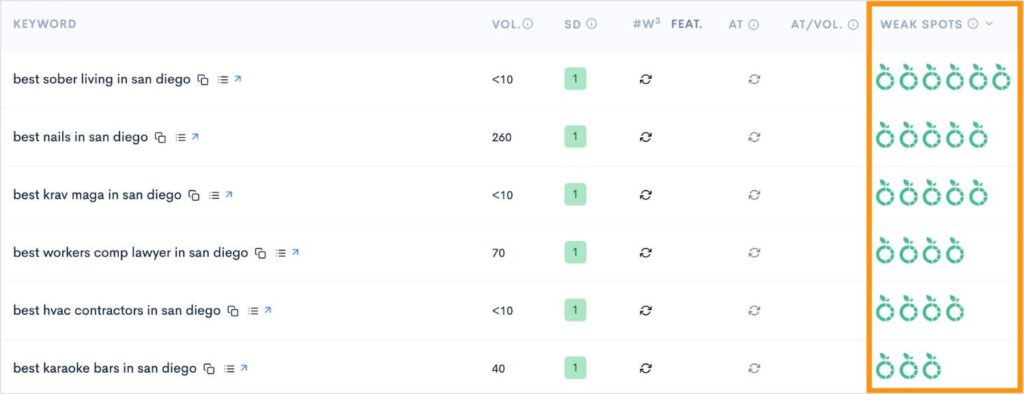
A Weak Spot is a low-authority website ranking on page 1, like a small blog or a forum. Generally, these types of websites are easier to beat in SERPs, even if you have a relatively new site or low domain authority yourself.
LowFruits represents each Weak Spot as a green icon. The more Weak Spots there are, the easier it will be to rank high on the first page of Google for that particular keyword.
Step 4: Filter for Low Keyword Difficulty
Depending on how many keywords you analyzed, your report might still look overwhelming.
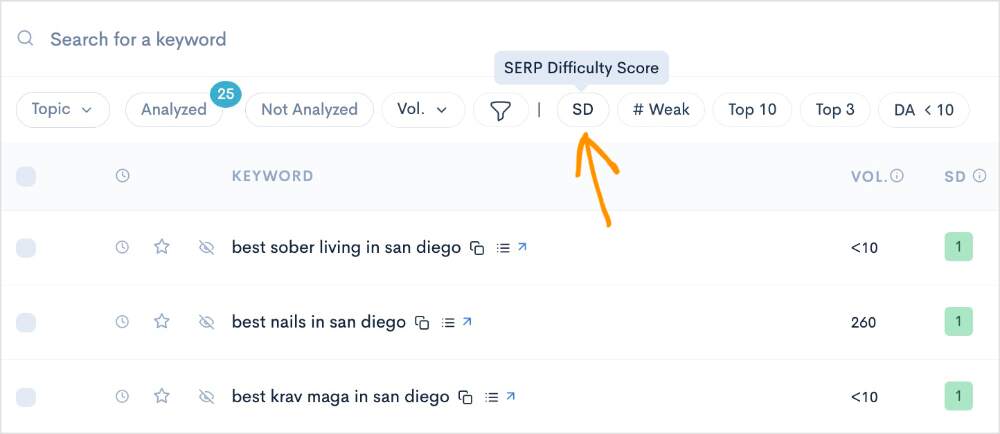
To help you narrow down your list to only easy keywords, we’ll use the SERP Difficulty (SD) filter.
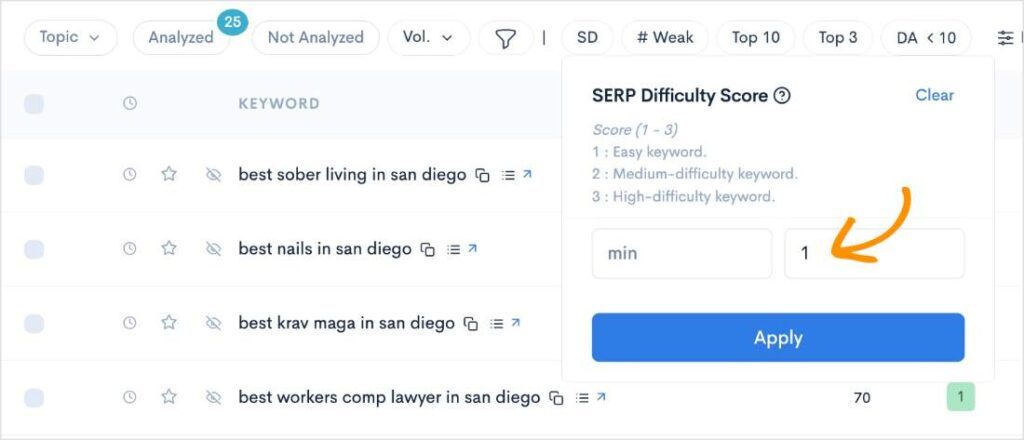
SERP Difficulty is the LowFruits metric for keyword difficulty. It uses a simple 1-to-3 scale:
- SD 1: Easy (Green – Go for these!)
- SD 2: Medium (Yellow – Doable, but takes work)
- SD 3: Hard (Red – High competition)
Click on the SD filter at the top of the column.
Then, set the maximum to 1, and click Apply. (You could make this 2 if you have a higher DA.)
Now, you’re only looking at keywords where you have a realistic shot at the top spots.
Step 5: Prioritize by Volume
You should now have a list of easy keywords (SD 1) with several Weak Spots.
But which one should you target first?
I always recommend sorting by search volume. This way, you’ll focus your early efforts on keywords that can produce the most traffic quickly.Click the “Vol.” column header to sort your list from highest to lowest.
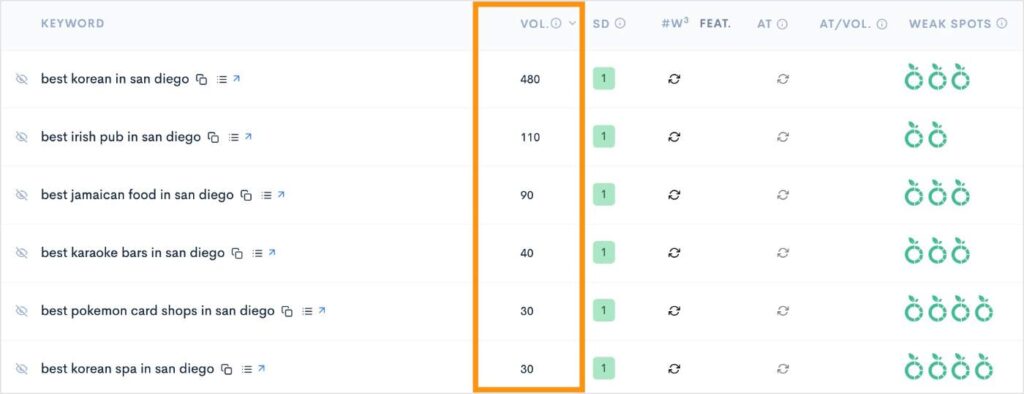
Now you’ll have your low-hanging fruits: terms that have the highest traffic potential and the lowest competition.
These are perfect targets for entering the market as a new travel blogger or travel agency.
50+ Travel Keyword Ideas to Jumpstart Your Strategy
Sometimes the hardest part is just getting the ball rolling.
If you’re staring at a blank screen, here are 50+ travel keyword ideas and formulas you can plug into LowFruits to find low-competition opportunities.
I’ve broken them down by category so you can pick the ones that fit your niche.
1. Niche Accommodation (The “For X” Modifier)
Stop writing about the “best hotels in London.” It’s too broad. Instead, target specific needs.
- best hotels in [city] for couples
- best family-friendly hotels in [city] with a pool
- pet-friendly hotels in [city] near [landmark]
- best boutique hotels in [city] for solo travelers
- hotels in [city] with free parking
- cheap hostels in [city] for backpackers
- luxury resorts in [city] for honeymoon
- best Airbnbs in [city] for large groups
- hotels in [city] near the airport with shuttle
- glamping spots near [city]
2. Logistics & “How-To” (The Frustration Solvers)
Travelers are stressed about logistics. If you can solve their confusion, you win their trust.
- how to get from [airport] to [city center]
- Is there Uber in [city]?
- best sim card for [country] tourists
- driving in [country] for US tourists
- public transport guide for [city]
- renting a car in [city]
- do I need a visa for [country]?
- can you drink tap water in [city]?
- tipping etiquette in [country]
- best travel insurance for [activity/country]
3. Safety & Concerns (High Trust)
These keywords are fantastic for building authority. The search volume might be lower, but the intent is incredibly high.
- is [city] safe for solo female travelers?
- is [city] safe at night?
- common tourist scams in [city]
- areas to avoid in [city]
- traveling to [city] with a peanut allergy
- is it safe to drive in [country]?
- crime rate in [city] vs [city]
- emergency numbers in [country]
- health risks in [region]
4. Itineraries & Activities (The Planners)
Help your readers plan their days.
- 3 days in [city] itinerary
- weekend getaway from [city]
- best day trips from [city] by train
- things to do in [city] when it rains
- free things to do in [city] with kids
- best hiking trails near [city] for beginners
- romantic things to do in [city] at night
- best coffee shops in [city] for digital nomads
- where to see the sunset in [city]
- non-touristy things to do in [city]
5. Budget & Cost (The Wallet Watchers)
Everyone wants to know how much a trip will cost.
- is [city] expensive to visit?
- daily budget for [country] backpacking
- cheap eats in [city] under $10
- cost of beer in [city]
- how to save money in [city]
- cheapest time to fly to [Destination]
- free museums in [city]
- budget friendly tours in [city]
- cost of living in [city] for a month
- student discounts in [city]
6. Food & Drink (The “Must-Eats”)
They say one of the best ways to experience a culture is through its food.
- best street food in [city]
- must-try dishes in [country]
- best vegan restaurants in [city]
- best wineries near [region]
- food markets in [city]
Pro Tip: Take any of these formulas and plug them into the LowFruits KWFinder using the Wildcard (*). For example, typing “best hotels in * with a pool” will generate hundreds of specific location ideas for you instantly.
Start Ranking for Travel SEO Keywords Today
I hope this article helped you realize that you don’t need to be Expedia or TripAdvisor to rank in the travel niche.
A massive list of high-volume keywords is just a vanity metric if you can’t rank for them. Real traffic and bookings come from a strategic approach that targets the gaps the big giants leave behind.
To recap, your winning strategy is:
- Ignore the “Volume Trap”: Stop chasing generic terms like “best hotels.”
- Use Wildcards: Find specific, long-tail queries like “is * safe for solo travelers.”
- Hunt for Weak Spots: Filter for an SD of 1 and look for forums or low-authority blogs on page 1.
LowFruits was built to automate this exact process. It takes the guesswork out of finding these opportunities so you can spend less time staring at spreadsheets and more time creating great content.
Don’t let the big competitors scare you off. Start finding your hidden gems today with LowFruits.
FAQs About Travel SEO Keywords
How do I find keywords for a travel blog?
The best way to find keywords for a travel blog is to use a keyword research tool that supports “Wildcard” searches. This allows you to find specific questions users are asking, such as “day trips from [city]” or “best time to visit [city].” Once you have a list, filter for keywords with low-authority sites in the top 10 results. This ensures you target topics you can actually rank for.
What is a good search volume for travel keywords?
There is no “perfect” number when it comes to keyword search volume. For new travel agencies or travel blogs, it’s more important to focus on search intent (why a user is performing a Google search). It’s better to rank #1 for a keyword with 200 searches and clear search intent than #50 for a keyword with 20,000 searches and a vague topic.
How do I rank for travel SEO keywords without high domain authority?
You can rank without high authority by targeting keywords that have low-authority domains ranking in the top positions. Keyword research tools will show you the domain authority (DA) of ranking websites. A comprehensive, well-structured blog post can often outrank these websites, as long as your content is better than the competition.
What are long-tail travel keywords?
Long-tail travel keywords are highly specific search queries, usually containing 3 or more words. Instead of searching for “Paris hotels,” a long-tail variation would be “best boutique hotels in Paris for couples.” These keywords have lower competition and higher conversion rates because the user knows exactly what they want.


